What is the Nepal Electricity Authority (NEA)?
The Nepal Electricity Authority (NEA) is Nepal's government-owned electricity utility responsible for generating, transmitting, distributing, and selling electricity throughout the country. Established in 1985, NEA supplies electricity to millions of residential, commercial, industrial, agricultural, and institutional consumers across Nepal. The organization also imports and exports electricity and manages the national transmission grid.
Whenever you receive an electricity bill, it is the NEA that calculates your monthly consumption based on approved tariff rates. However, NEA does not independently decide electricity prices. Electricity tariffs are approved by the national regulator under the applicable legal framework, ensuring that pricing remains transparent and standardized across the country.
Responsibilities of NEA
NEA performs several important functions:
- Generates electricity through hydroelectric and other power plants.
- Purchases electricity from Independent Power Producers (IPPs).
- Imports electricity when domestic production is insufficient.
- Maintains transmission and distribution infrastructure.
- Installs and manages consumer electricity meters.
- Reads meters and prepares monthly bills.
- Collects payments from consumers.
- Expands electricity access throughout Nepal.
Simply put, NEA is the organization that delivers electricity to your home and sends you the monthly bill.
What is an Electricity Tariff?
Many people believe they simply pay a fixed price per unit of electricity. In reality, Nepal uses a tariff system, not a single fixed rate.
An electricity tariff is the official pricing structure used to calculate the amount a consumer pays for electricity. Instead of charging every unit at the same price, NEA uses different rates depending on:
- Consumer category
- Meter capacity (Ampere rating)
- Monthly electricity consumption
- Applicable service charges
- Government taxes and duties
- Other statutory charges, where applicable
This means that two households using the same number of units can receive different bills if they have different meter capacities or are subject to different applicable charges.
Why doesn't Nepal charge one fixed rate?
Electricity production and distribution involve significant infrastructure costs. To promote affordable access while encouraging responsible consumption, Nepal follows a progressive slab tariff.
Under this system:
- Low electricity users pay lower rates.
- Higher electricity users gradually pay higher rates.
- The system encourages efficient energy use.
- Basic electricity remains affordable for most households.
This approach is commonly used in many countries because it balances affordability with the cost of maintaining the electricity network.
Who Decides Electricity Tariffs in Nepal?
A common misconception is that NEA sets electricity prices on its own.
In reality:
- NEA prepares tariff proposals based on operating costs, investment needs, and projected demand.
- The proposals are reviewed by the relevant regulatory authority established under Nepal's electricity regulatory framework.
- After review and approval, the tariff schedule becomes effective.
- NEA then applies the approved tariff uniformly to consumer bills.
This regulatory process helps ensure that tariff revisions follow a formal review rather than unilateral decisions by the utility.
Who Pays Electricity Tariffs?
Every consumer connected to the NEA network pays electricity according to their consumer category.
The major categories include:
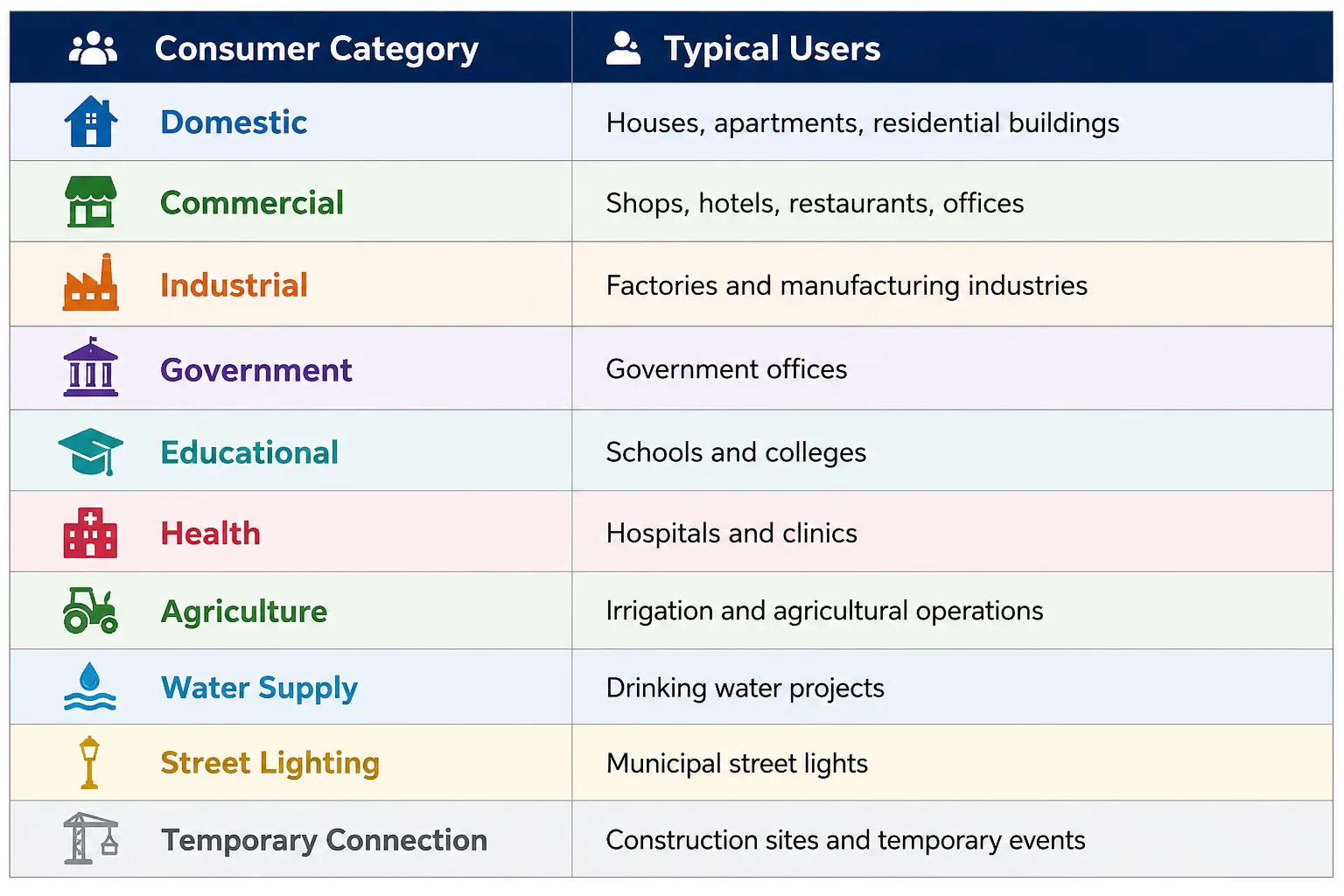
Each category has its own tariff schedule because electricity usage patterns and infrastructure requirements differ.
This guide focuses primarily on domestic (household) consumers, as they represent the largest group of electricity users in Nepal.
Understanding Domestic Electricity Meter Types
One of the biggest factors affecting your electricity bill is your meter capacity, measured in Amperes (A).
Many consumers know they have a "household connection" but are unaware of the ampere rating printed on their meter or electricity bill.
Common domestic connections include:
Meter Capacity
Typical Household
5 Ampere-Very small household with basic appliances
15 Ampere-Standard household (most common)
30 Ampere-Large household with higher electricity demand
60 Ampere-Very large homes with heavy electrical loads
What does Ampere (A) mean?
An ampere rating indicates the maximum electrical current that can safely flow through the connection.
A higher ampere rating allows more electrical appliances to operate simultaneously without overloading the connection.
For example:
5 Ampere Connection
Suitable for:
- LED lights
- Television
- Mobile charging
- One fan
- Very small household
15 Ampere Connection
Suitable for:
- Refrigerator
- Television
- Rice cooker
- Washing machine
- Water pump
- Multiple lights and fans
This is the most common residential connection in Nepal.
30 Ampere Connection
Suitable for:
- Air conditioner
- Electric oven
- Induction cooker
- Water heater (geyser)
- Multiple high-power appliances
60 Ampere Connection
Typically used in:
- Large houses
- Luxury homes
- Buildings with extensive electrical equipment
- Homes with multiple high-load appliances operating simultaneously
Why is the Meter Capacity Important?
Your ampere rating affects more than just the maximum load—it also influences parts of your monthly bill. While the energy charge depends on how many units (kWh) you consume, the fixed service charge is linked to your meter capacity and applicable tariff schedule. As a result, households with higher-capacity connections generally pay higher fixed monthly charges, even if their electricity consumption is similar.